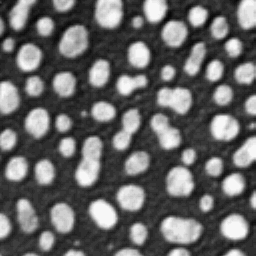
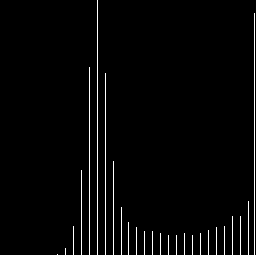
An image and its histogram

There is no substitute for a high quality image in digital imaging and microscopy
Garbage In gives Garbage Out
This webpage illustrates some common artefacts introduced when acquiring
images with either not enough contrast (no
Koehler illumination),
too much or not enough light, out of focus, faint staining, etc. Small
details are the first to disappear and images of an inferior quality
are the result.
The artefacts shown here ultimately lead to a bias in the results when
measurements take place and are a cause of inaccuracy and errors in our
research and conclusions.
Proper biological sample preparation, proper use of the
microscope and the camera used for
image acqusition are the main remedies against these artefacts.
The first part of this webpage
shows the relationship between image quality and
the segmentation result of the image. The change in detected object shape is shown,
compared to a reference image.
The second part of this webpage
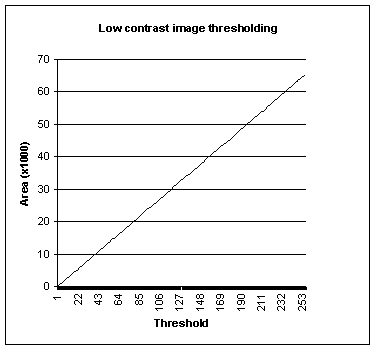
shows the relationship of the image
quality in terms of contrast and the results on feature measurements derived
from the image.
The third part of this webpage
shows the relationship of the image quality in terms of the dark current of
the camera and the influence on ratio measurements.
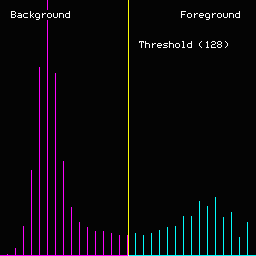
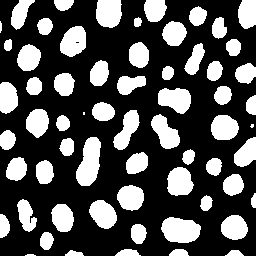
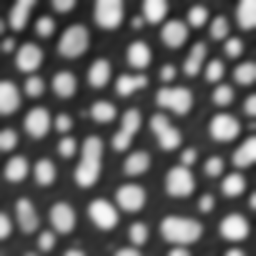
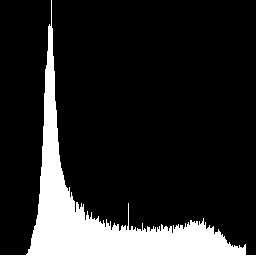
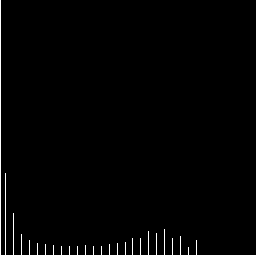
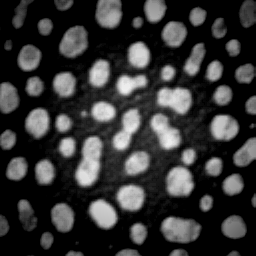
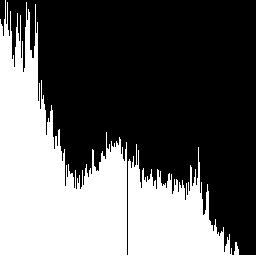
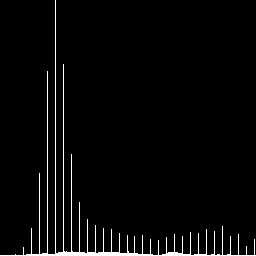
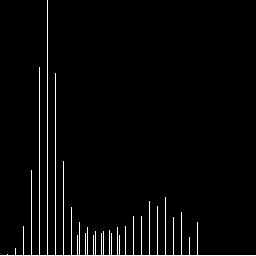
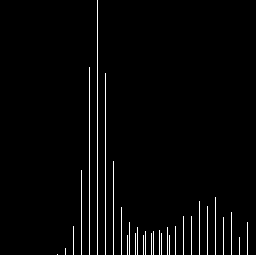
The images above show a digital image and its histogram, which provides us
with information about the distribution of the gray-leves of the image. As
such it is a very useful source of information about the quality of the image.
The histogram shows two peaks, the one to the left corrsponds with
the background, the one on the right corresponds with the foreground.
Definition of a histogram: The histogram of a digital image with
gray levels
in the range [0,L-1] (eg. 0-255) is a discrete function
p(rk)=nk/n, where rk is the kth
grray level, nk is the number of pixels in the image, and
k=0,1,2, ... , L-1.
Loosely speaking p(rk) gives an estimate of the probability of
occurrence of gray-level rk.

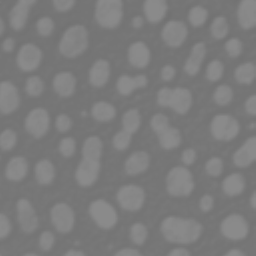
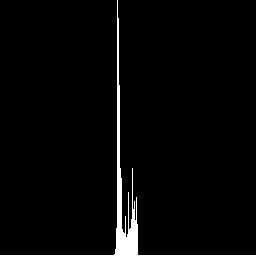
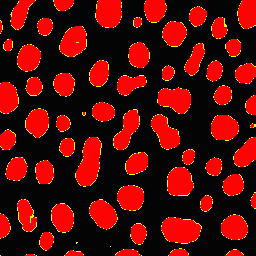
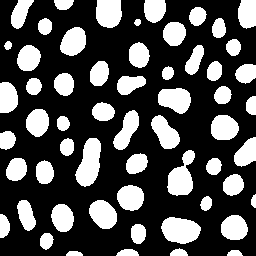
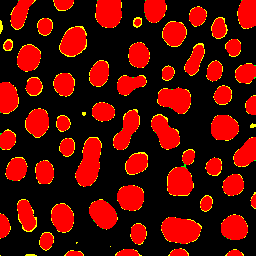

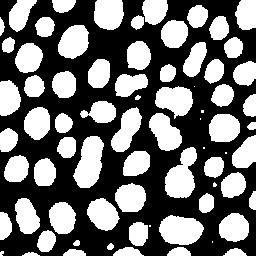
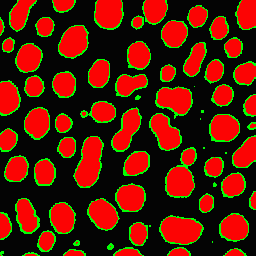
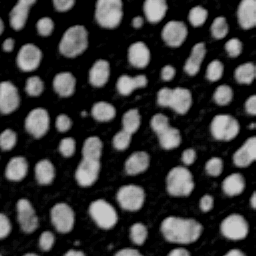
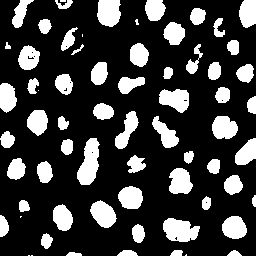
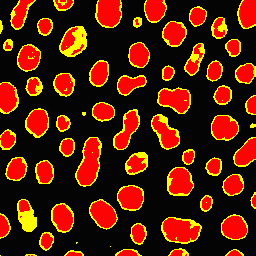
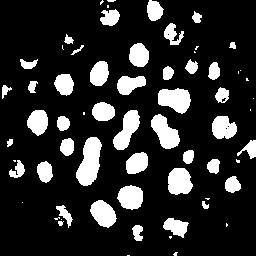
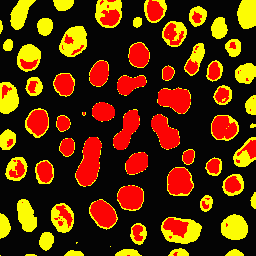


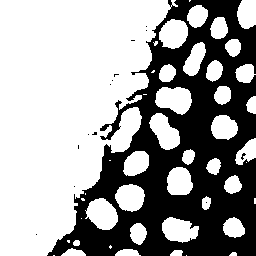
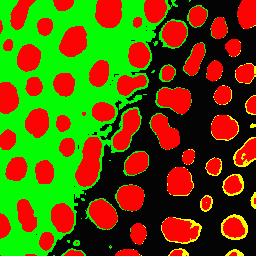
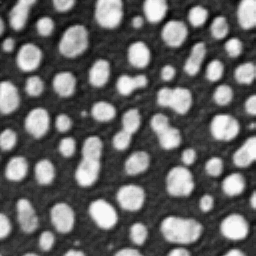
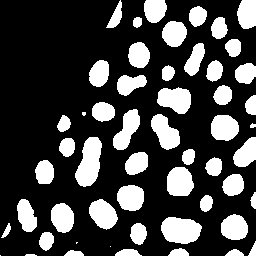
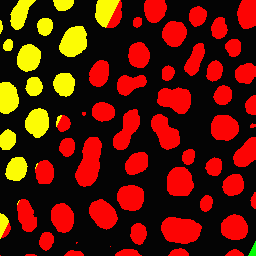
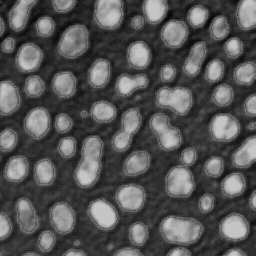
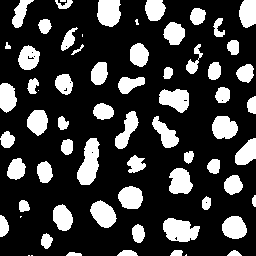
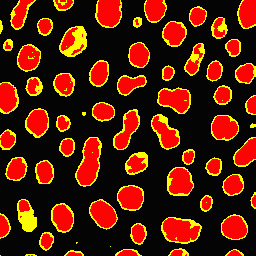
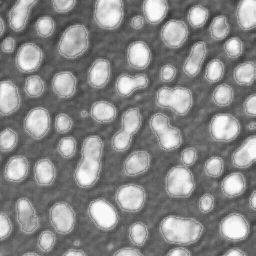
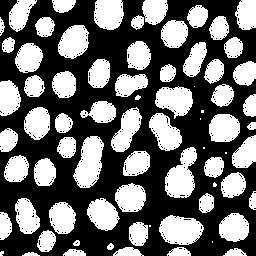
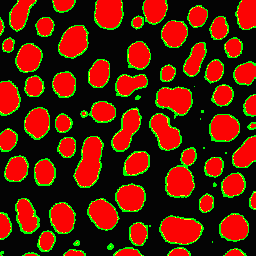
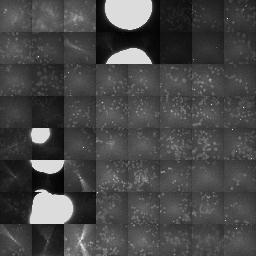
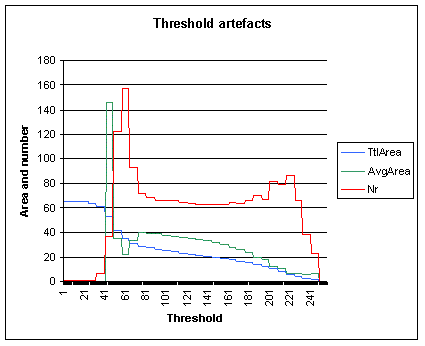
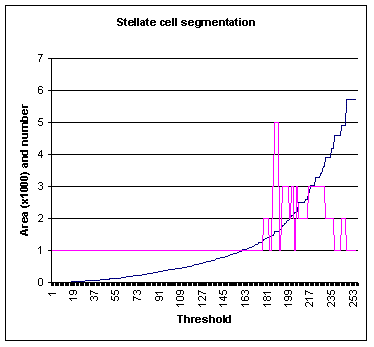
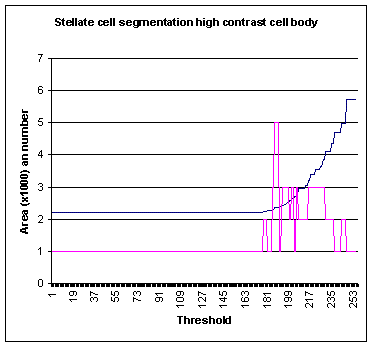
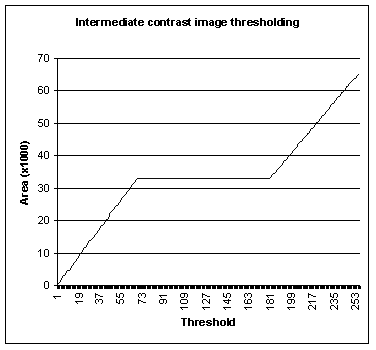
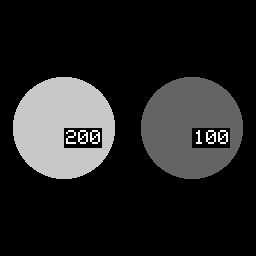
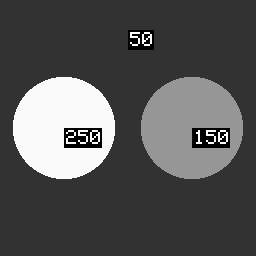
Here we show you the errors which arise from using low quality images for
measurement and improper manipulation of thresholds for segmentation.
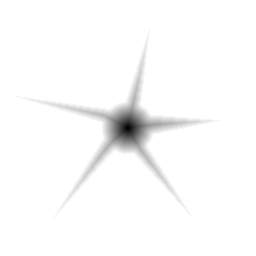
The segmentation of these images, in all but the first, is done on the
dark part of the image, to simulate a darkening sample staining on a brighter background.










I am indebted, for their pioneering work on automated digital microscopy and High Content Screening (HCS) (1988-2001), to my former colleagues at Janssen Pharmaceutica (1997-2001 CE), such as Frans Cornelissen, Hugo Geerts, Jan-Mark Geusebroek and Roger Nuyens, Rony Nuydens, Luk Ver Donck, Johan Geysen and their colleagues.
Many thanks also to the pioneers of Nanovid microscopy at Janssen Pharmaceutica, Marc De Brabander, Jan De Mey, Hugo Geerts, Marc Moeremans, Rony Nuydens and their colleagues. I also want to thank all those scientists who have helped me with general information and articles.
The author of this webpage is Peter Van Osta.
Private email: pvosta at gmail dot com